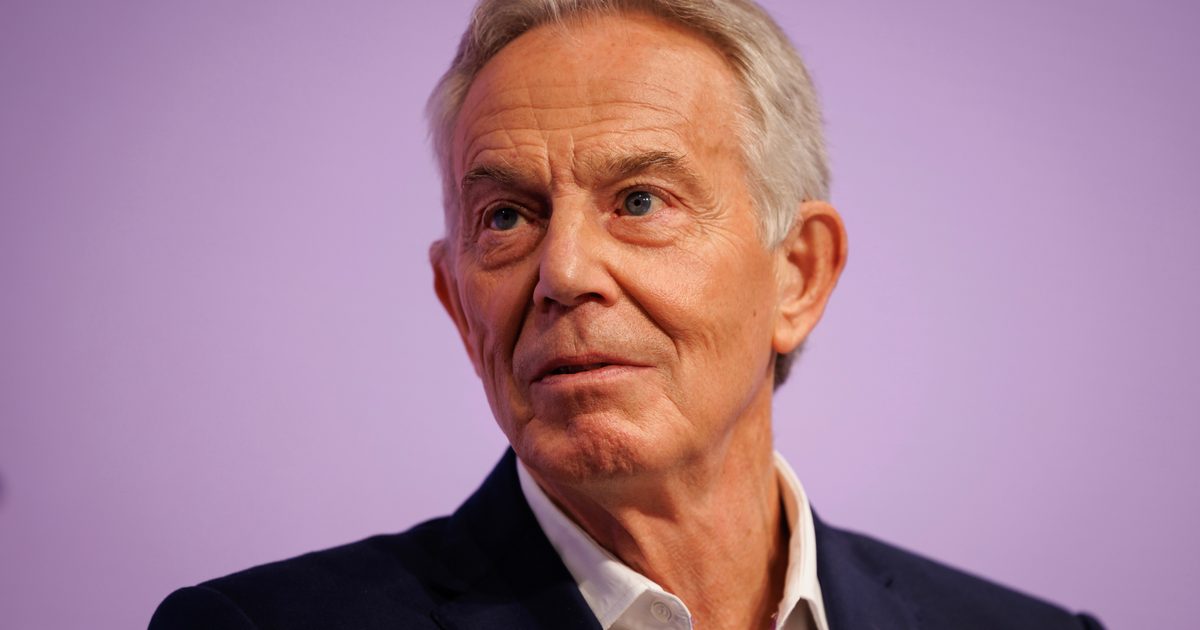
Peeling Back Layers: A New Look at Tony Blair's Legacy
Few British political figures evoke such strong, often conflicting, emotions as Tony Blair. His decade in Downing Street ushered in a transformative era for the Labour Party and the UK, marked by both monumental achievements and deep-seated controversies. Now, a new "Blair Documentary" from Channel 4 promises to deliver an unprecedented and comprehensive examination of this enigmatic leader, offering audiences a unique opportunity to revisit his journey from a meteoric rise to his enduring influence on the global stage.
This landmark series, titled "The Tony Blair Story," aims to cut through the noise of political spin and tabloid sensationalism, presenting a fresh, nuanced perspective on a man whose decisions continue to shape contemporary discourse. With an in-depth interview with the former prime minister himself, alongside accounts from those who knew him best – friends, allies, and even his staunchest opponents – this documentary is poised to spark new conversations and perhaps even recalibrate perceptions of one of modern Britain's most impactful leaders.
Unveiling "The Tony Blair Story": What to Expect
The anticipation for this comprehensive "Blair Documentary" has been building since its announcement, and now its release date is confirmed.
The Tony Blair Story: Channel 4 Air Date & What To Expect will air its first episode on
Tuesday, 17th February at 9pm on Channel 4. Viewers won't have to wait long for the full picture, as the subsequent two episodes are scheduled for the 18th and 19th of February, with the entire series becoming available for streaming shortly after the initial broadcast.
Produced by the acclaimed 72 Films, a production company renowned for its insightful political narratives like "The Rise and Fall of Boris Johnson" and "The Zelensky Story," this documentary carries a significant weight of expectation. Their track record suggests a commitment to rigorous research and a multi-faceted approach, moving beyond simplistic narratives to explore the deeper currents of political power and personal conviction. Unlike previous productions, such as the BBC's 2021 "Blair & Brown: The New Labour Revolution," which focused on the intertwined destinies of two political giants, "The Tony Blair Story" is set to place Blair himself squarely in the spotlight, offering an intensely personal and introspective look at his life and career.
The official synopsis paints a compelling picture, promising to "peel back the layers of political spin and tabloid sensationalism" to offer a "fresh perspective on the man who transformed the Labour Party and reshaped Britain." This suggests an ambitious effort to contextualize the key moments of his leadership, from his groundbreaking election victories to the most challenging decisions of his tenure. For anyone seeking to truly understand the architect of New Labour, this series offers a rare opportunity to go "beyond the headlines" and gain a gripping insight into the complexities of one of the most influential Prime Ministers of the modern era.
Beyond Downing Street: Blair's Enduring Influence
While the "Blair Documentary" will undoubtedly delve deep into his years as Prime Minister, it also serves as a timely reminder that Tony Blair's impact didn't conclude with his departure from Downing Street. Almost two decades after leaving office, his presence in global politics and policy remains remarkably potent. As the man himself once reflected when asked about his post-premiership power versus influence, he acknowledged, "Not as much power as when I was prime minister – but influence – yes, to a degree." This distinction is critical to understanding his current role.
His primary vehicle for this influence is
The Tony Blair Institute for Global Change (TBI). Far from a passive think-tank, the TBI is an active, dynamic force, publishing extensive research across a myriad of pressing global issues. What sets it apart is its practical, advisory role. Blair personally advises leaders around the world, leveraging his unique experience and insights to tackle contemporary challenges. During the height of the COVID-19 pandemic, for instance, the TBI swiftly pivoted its entire focus to provide critical advice to governments grappling with unprecedented strains on public services. This proactive, agile approach positioned the Institute, and by extension Blair himself, as a formidable force in global policy.
Indeed, as noted by Tom McTague, editor of the New Statesman, "It was the Tony Blair Institute which seemed to be ahead of the government." This foresight led to a fascinating phenomenon: current and former prime ministers, including Liz Truss, Boris Johnson, and even Sir Keir Starmer before he became Labour leader, sought out Blair's counsel. This demonstrates a unique form of soft power, where profound experience and strategic acumen translate into invaluable guidance for leaders navigating complex political landscapes. For a deeper dive into his post-premiership career, explore
Tony Blair's Enduring Influence: From PM to Global Advisor. This enduring relevance, where a former leader continues to shape policy and thought on an international scale, is a testament to Blair's acute political management and his ability to adapt his skills to a new era of global challenges.
Navigating the Complexities of a Political Giant
To discuss Tony Blair's legacy is to navigate a landscape of stark contrasts and profound complexities. He remains, unambiguously, a key figure in Britain's modern history, yet one whose tenure evokes a wide spectrum of opinions. On one hand, he stands as the most electorally successful Labour leader ever, achieving three consecutive general election victories – an unparalleled feat. For many, his decade in power represented a "golden age" of stability and prosperity, underpinned by shrewd political management, exemplified by his relationship with figures like Peter Mandelson. The economic growth, investment in public services, and significant constitutional reforms like devolution stand as enduring achievements.
On the other hand, Blair's premiership is inextricably linked with controversy, particularly regarding the Iraq War, which many consider his "gravest mistake" and a decision that continues to polarise public opinion. His centrist "New Labour" project, while electorally successful, also alienated elements of the traditional left, prompting ongoing debates about the soul and direction of the Labour Party. Furthermore, the world Blair championed – one of managed globalisation, European integration, and interventionism – has, in many respects, crumbled around him. The rise of populism, epitomised by figures like Nigel Farage, and the fracturing of international alliances stand in stark contrast to the ideals he sought to uphold.
The upcoming "Blair Documentary" must, therefore, grapple with these profound contradictions. It promises to explore how a leader, whose political instincts were once seen as unerringly modern and forward-thinking, now finds himself in a world that has shifted dramatically. Understanding Blair requires acknowledging both his visionary leadership in areas like the Northern Ireland peace process and his controversial decisions that had far-reaching consequences. The documentary's stated aim to "peel back the layers" implies a commitment to exploring these difficult truths, presenting the multifaceted nature of his character and the intricate web of decisions that defined his time in power and beyond.
Why This Blair Documentary Matters Now
The release of "The Tony Blair Story" couldn't be more timely. In an era of political volatility and uncertainty, and with Sir Keir Starmer's leadership often drawing comparisons – both favourable and critical – to Blair's tenure, revisiting this period is more than a historical exercise; it's a critical lens through which to view contemporary challenges. The documentary offers a vital opportunity to reflect on a period of relative political stability and economic growth that some now yearn for, prompting questions about leadership, strategy, and the very nature of political power.
For viewers, approaching such a comprehensive "Blair Documentary" with an open and analytical mind is key. Here are some tips to get the most out of the series:
*
Consider Multiple Perspectives: The documentary promises interviews with friends, allies, and opponents. Pay close attention to the differing viewpoints and try to understand the motivations and contexts behind each.
*
Contextualise Decisions: Remember that decisions are made under specific historical pressures. Reflect on the information available at the time and the prevailing political climate.
*
Evaluate Long-Term Impact: Think critically about the lasting effects of Blair's policies, both domestically and internationally. How have they shaped Britain and the world we live in today?
*
Connect to Current Affairs: Draw parallels between the challenges Blair faced and those confronting current leaders. What lessons, positive or negative, can be gleaned for today's political landscape?
*
Form Your Own Judgement: Avoid preconceived notions. Allow the evidence and narratives presented in the documentary to inform your own considered opinion of Blair's legacy.
Ultimately, this "Blair Documentary" offers a unique chance to learn from the past, understand the complexities of political leadership, and engage in a nuanced discussion about the future of Britain and its place in the world. It’s an essential viewing for anyone interested in modern history, political science, and the enduring impact of extraordinary individuals on the course of nations.
Conclusion
The upcoming "Blair Documentary" on Channel 4, "The Tony Blair Story," represents more than just another historical retrospective; it is a meticulously crafted exploration of a figure whose influence continues to resonate through the corridors of power and the annals of public memory. By promising an unvarnished look at his rise, his decade in office, and his significant post-premiership work through the TBI, the series aims to offer both clarity and deeper understanding. Whether you view Tony Blair as a visionary statesman or a controversial figure, this landmark series provides an invaluable opportunity to engage with his complex legacy. As audiences prepare to delve into the layers of his story, the expectation is not merely to recount history, but to provide fresh insights into the decisions that shaped a nation and continue to define the political landscape.